What Canada's Latest Problem Gambling Data Shows
KingCasinoBonus may earn a commission when you click a link or sign up through our site, and this can affect where products appear. To be clear, that commission never changes our scores, our analysis, or our recommendations. Ratings are based solely on our 11-step testing process, and we publish a casino’s drawbacks alongside its strengths.
How many Canadians gamble, and how many of them have problems because of it? We have the answer! A new study provides clear figures. This guide compiles all the data along with some tips you should know if you feel like gambling has become a problem for you.
On this page
Problem Gambling Canada-Wide: What the New Study Found
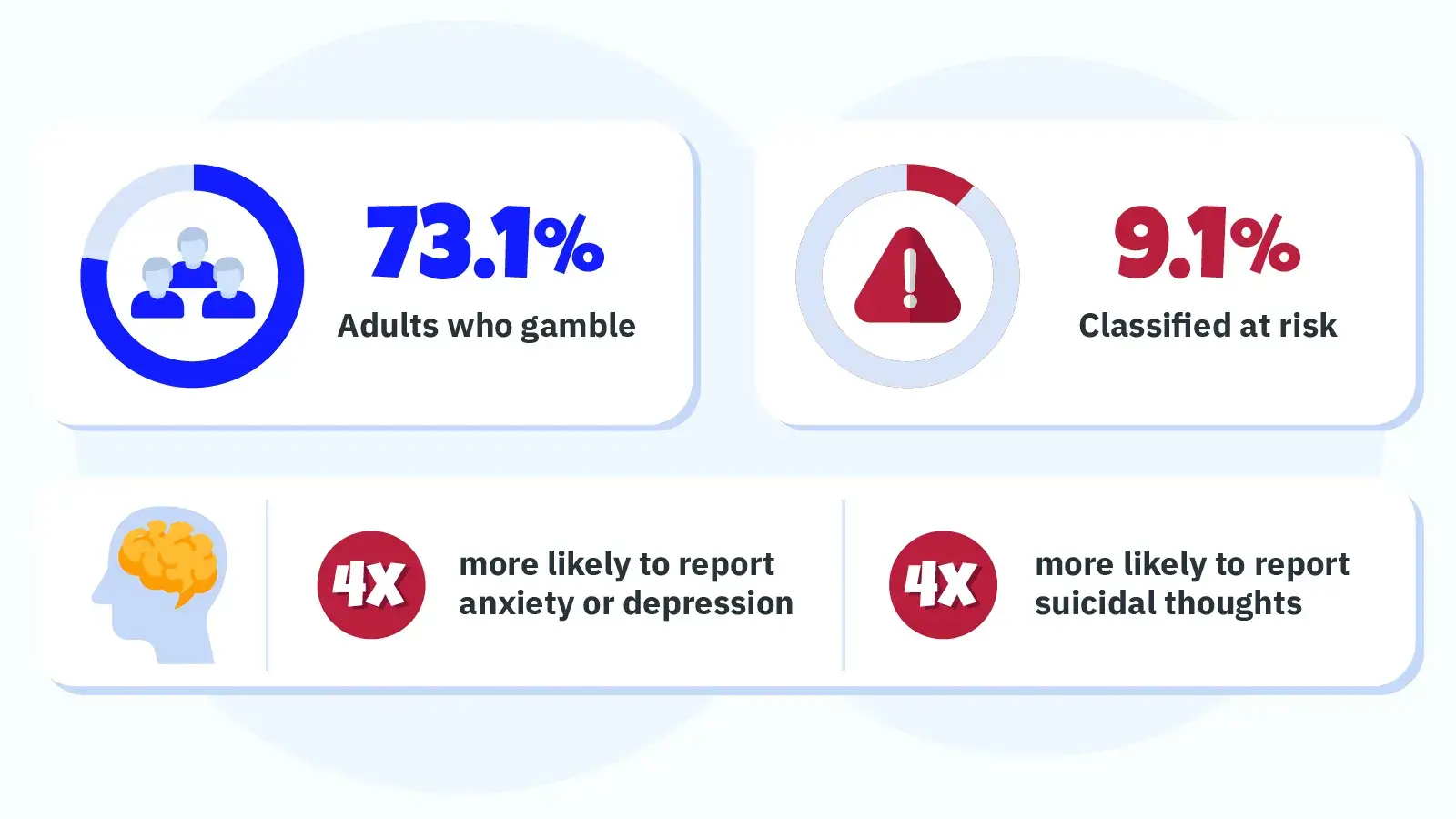
According to data from the new study, 9.1% of respondents were classified as having gambling problems. Most of them are young men who gamble online. Aside from this figure, which I mentioned earlier, 73.1% of Canadian adults said they gamble. Are you one of them?
Let’s put these two numbers together. We can draw a simple conclusion. Gambling itself is a common activity, right? One that most Canadian adults engage in. However, there is also a significant minority who suffer the negative effects of this activity. That’s why studies like this one which we’re discussing today exist: to understand where the real risk lies.
The Real Link to Mental Health
Another interesting finding from this study is that respondents classified as having a gambling problem were four times more likely to have anxiety or depression. And four times more likely to report having had suicidal thoughts in the past 12 months.
Unfortunately, these are serious, real figures. We’re sharing them with you for one simple reason: to show you why support resources matter!
Some information about the study
8,890 people participated in this study between October 2024 and January 2025. In addition to these figures, 51 follow-up interviews were conducted.
Young Adults Are the Group Most at Risk
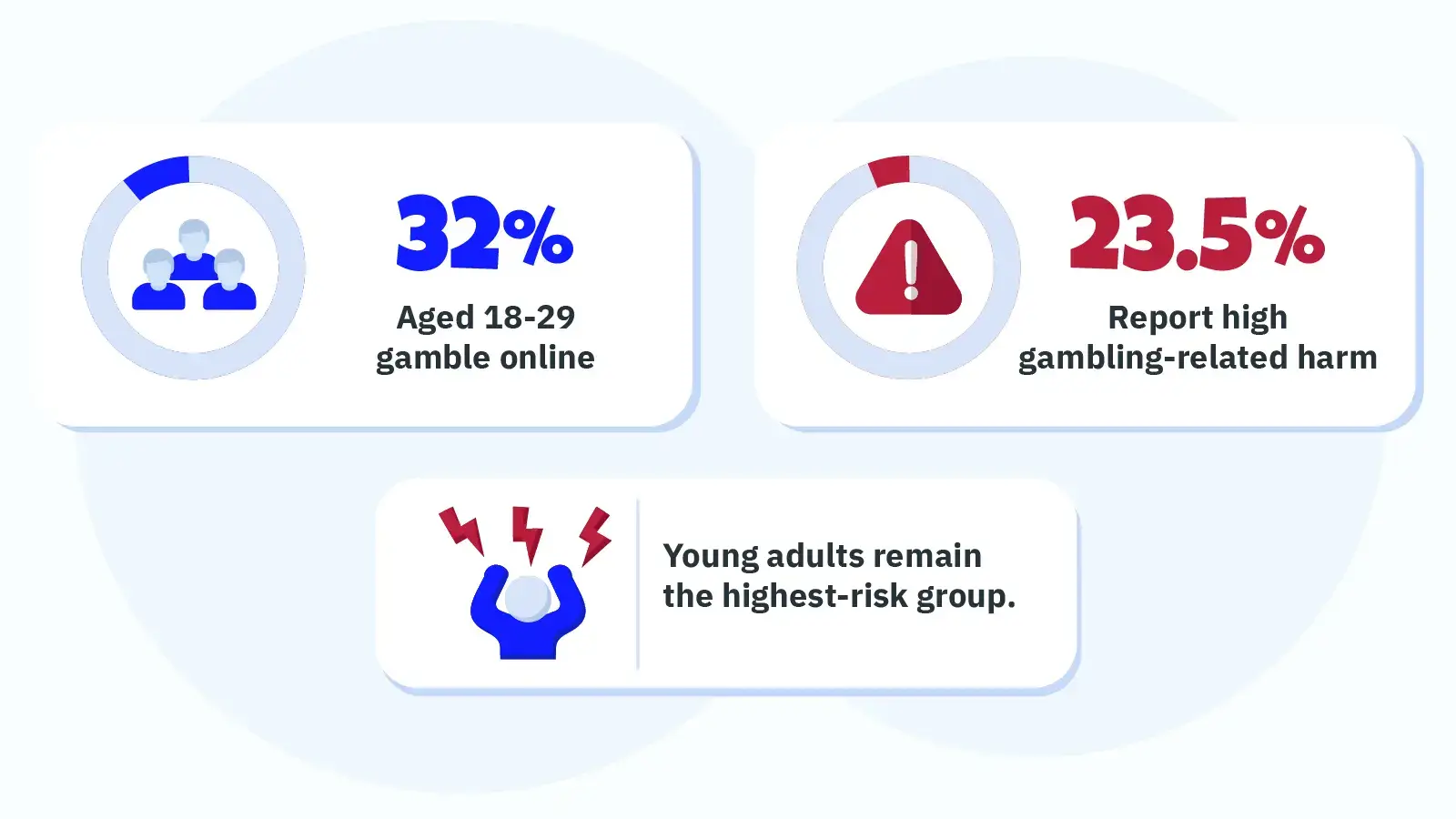
Unfortunately, we have to say this: young people are the group most at risk. We carefully reviewed a complementary study conducted by the CCSA and found that, out of 8,211 young people surveyed, 32% said they gamble online, and 23.5% said that gambling has seriously affected their lives.
This age group remains the focus of attention
Even the advertising restrictions imposed by Ontario on gambling ads target this group. Why? Because they can attract minors!
What can we take away from these figures? That a quarter of young people who gamble online say they have problems with gambling. It’s a truly high number we have to be honest. This suggests that the risk isn’t evenly distributed among players. Young people are the most affected!
Now do you understand why regulators are paying so much attention to this issue? That’s why advertising restrictions are now in place, and identity verification during registration is much more rigorous.
How This Connects to Ontario’s New Self-Exclusion Tool
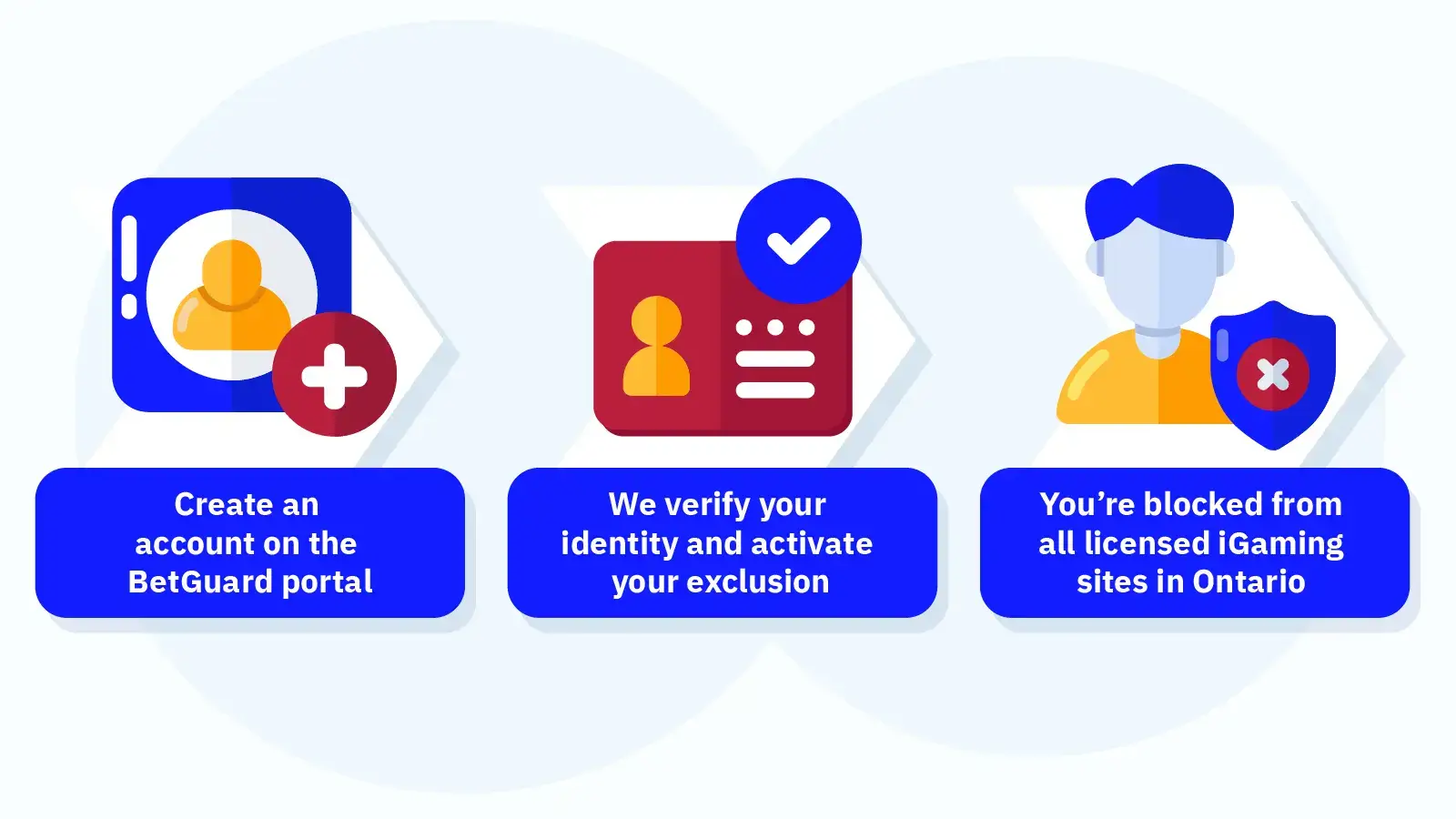
On May 14, 2026, Ontario’s centralized self-exclusion program was launched. It’s called BetGuard. In the first two weeks, over 500 players signed up. Basically, you sign up once and you’re excluded from all iGaming sites in Ontario.
This is a concrete example of support not just a model that exists on paper but not in reality. If you want to know whether the casino you’re playing at participates in BetGuard, check directly on the operator’s websites.
How was the BetGuard program launched?
BetGuard was lounched in May 2026, six months after the MHRC and CCSA published the research I mentioned earlier. It’s important to note that there is no direct link between the two. However, we can draw another important conclusion. Ontario’s regulatory authority continues to develop player protection tools as the volume of research on this topic grows.
The 500 sign ups in the first two weks show us that the demand is real, and that players needed this program.
Where to Get Real Support
If you feel that gambling is causing you harm there is real free suport available to you. We ll outline some of the options available:
- Responsible Gambling Council: It’s completely free and confidential. Here, you can get the support you need.
- Canadian Centre on Substance Use and Addiction: The research organization we mentioned earlier, which conducted the study. You’ll also find many useful resources here.
- Gambling Therapy: Whether it’s for you or someone close to you, this is a free, international support service.
- Centre for Addiction and Mental Health: Here, too, you’ll find many helpful resources and additional information about mental health.
Keep in mind that you don’t have to be in a crisis to reach out to any of these resources. They’re designed for you and for any other gambler who needs help.
Where to Go From Here
To acces the site’s full range of responsible gaming resources, visit the page dedicated to responsible gaming tools, including how BetGuard works and other self-exclusion tools.
If gambling is affecting you or someone you know, you can get free support through the Responsible Gaming Council, Gambling Therapy, and CAMH. Have you read this far, and does any of this sound familiar? Don’t hesitate! Ask for help, don’t wait for things to get worse.