Blackjack Basic Strategy Cuts the House Edge to Under 1%
KingCasinoBonus may earn a commission when you click a link or sign up through our site, and this can affect where products appear. To be clear, that commission never changes our scores, our analysis, or our recommendations. Ratings are based solely on our 11-step testing process, and we publish a casino’s drawbacks alongside its strengths.
Blackjack already has one of the lowest house edges, but many players lose part of that advantage without even realizing it. If you follow basic strategy, you can reduce the house edge. We’ve put together a guide that will show you what to do. Let’s go through the following steps together!
On this page
What Basic Strategy Means
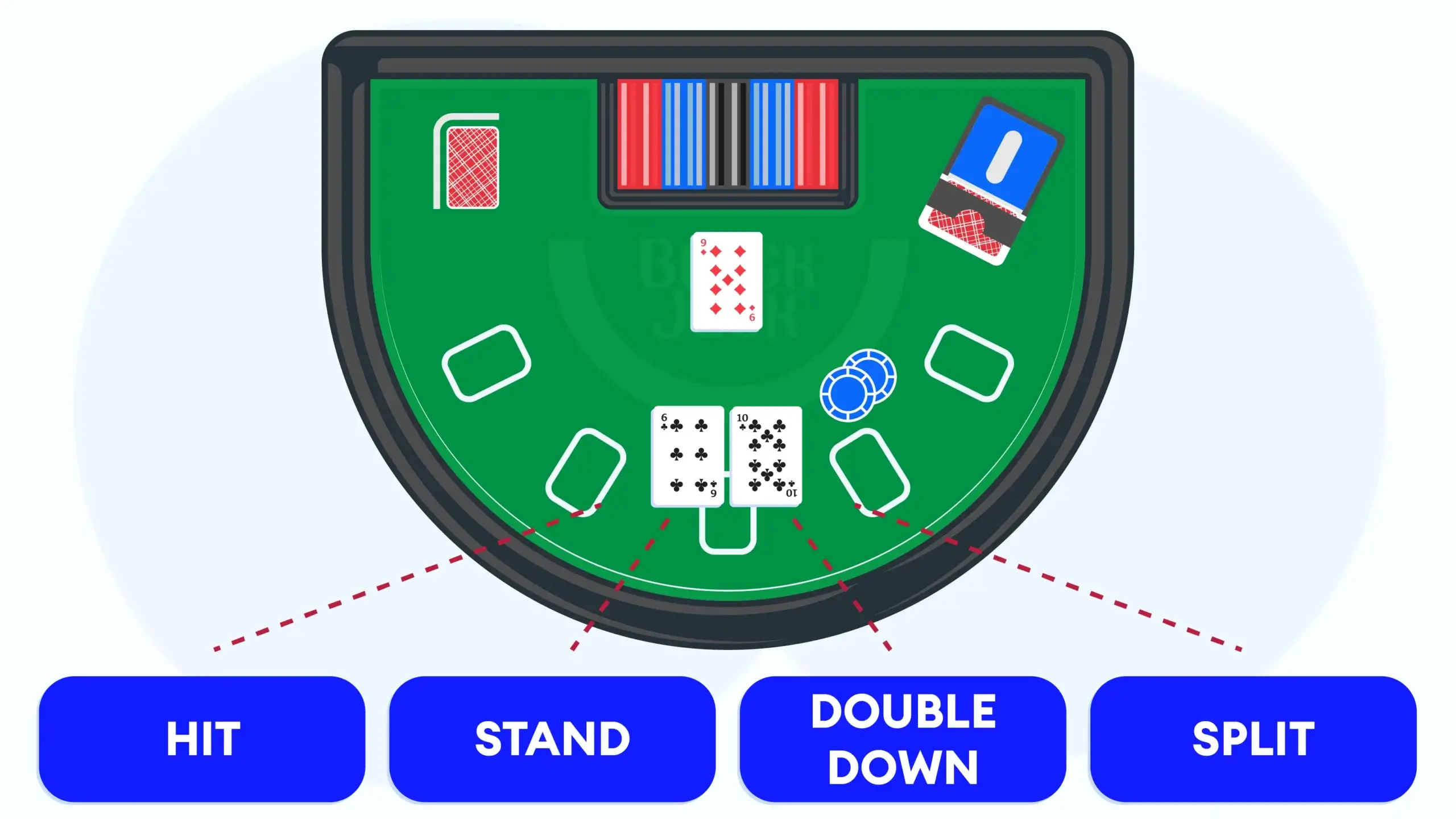
The basic strategy is essentially a guide that tells you what the best decision is from a mathematical standpoint. In other words, it takes into account your cards and the dealer’s upcard, so you know when to hit, stand, double down, or split. We know that it’s hard to make good decisions during a tense session, so a basic strategy can help you.
Here’s something you probably don’t know: the basic strategy isn’t about counting cards, okay? You don’t have to remember which cards have been played or keep track of the deck. Not at all! If you have the same hand and the dealer shows the same card, your decision will be the same every time.
But you’re probably wondering why you should use basic strategy. Because playing on instinct or based on various myths can leave the house edge at 1.5%, sometimes even higher! If you use basic strategy, you lower the house edge to 0.5%. Do you see the difference? It doesn’t guarantee a win, but it definitely improves your odds.
Don’t get the wrong idea. The basic strategy chart isn’t a rule we or anyone else made up. It’s based on millions of simulated hands, combined with mathematical calculations. That’s where it all starts!
The Basic Strategy Chart: Hard Totals
A hard hand is a hand without an Ace or a hand in which the Ace must be counted as 1 to avoid going over 21, right? In Blackjack, these are the most common hands, so we think it’s important to know a few simple rules.
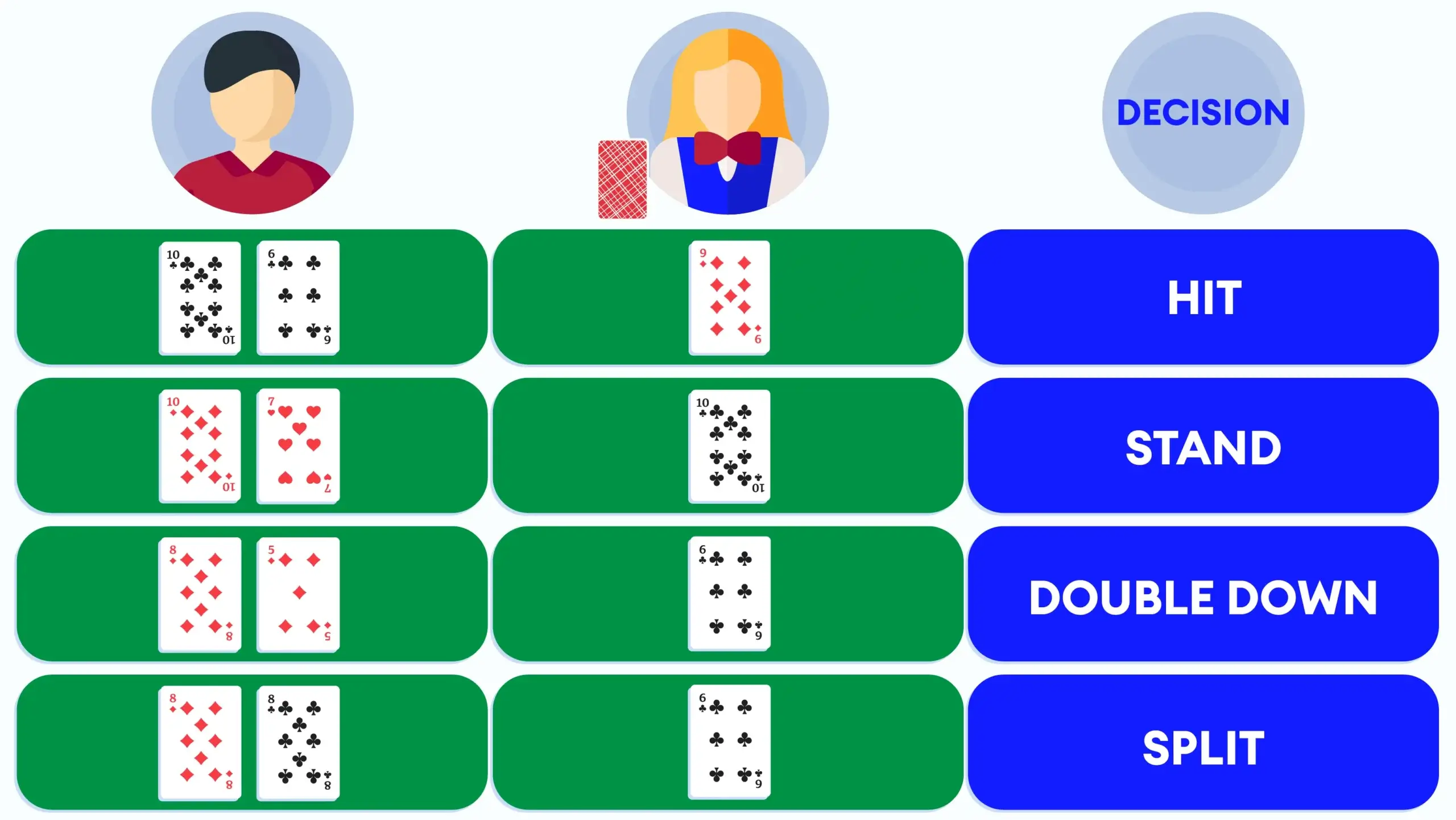
Let’s say you have 8 or less then hit. With 9, 10, or 11, you can also consider doubling down, especially if you see that the dealer has a weak upcard. This is when you can improve your hand with just one card.
However, if you have 17 or more, stand. It’s risky because you could go over 21 if you ask for another card.
We know, it might sound difficult, but the toughest decisions come when you have 12-16. Here, you need to look closely at the dealer’s upcard. Check the table below carefully, and you’ll understand what to do in that situation. We’ll let you in on a secret. The weaker the dealer’s upcard, the more reason you have to stand and let the dealer take the risk of going over 21.
| Your Hand | Dealer 2-3 | Dealer 4-6 | Dealer 7-8 | Dealer 9-10 | Dealer A |
|---|---|---|---|---|---|
| 8 or less | Hit | Hit | Hit | Hit | Hit |
| 9 | Hit vs 2, Double vs 3 | Double | Hit | Hit | Hit |
| 10 | Double | Double | Double | Double vs 9, Hit vs 10 | Hit |
| 11 | Double | Double | Double | Double | Hit |
| 12 | Hit | Stand | Hit | Hit | Hit |
| 13-16 | Stand | Stand | Hit | Hit | Hit |
| 17+ | Stand | Stand | Stand | Stand | Stand |
The reason is simple. If the dealer has a 2 through 6, there’s a pretty good chance they’ll go over 21, specifically, between 35% and 42%, depending on the card they’re holding. As you’ve probably figured out, the dealer must hit until they reach at least 17, and in most situations, it’s best to stand and let them take the risk.
If the dealer has a 7 through an Ace, the situation changes slightly. There’s a much lower chance of them going over 21, so if you have a weak hand, we think it’s worth trying to improve it, even if there are risks involved.
When should you double down?
Doubling down may seem risky, we know, because you’re increasing your bet. However, in many situations, it’s the right choice! With an 11, double down against any dealer’s upcard. Only if the dealer has an Ace should you not do this! You have a good chance that card will bring you to 21 or maybe even 21.
How to Play Soft Totals and Pairs
If you have a soft hand, it means you have an Ace that can be counted as 11, but without exceeding 21. Pairs consist of two cards of the same value.
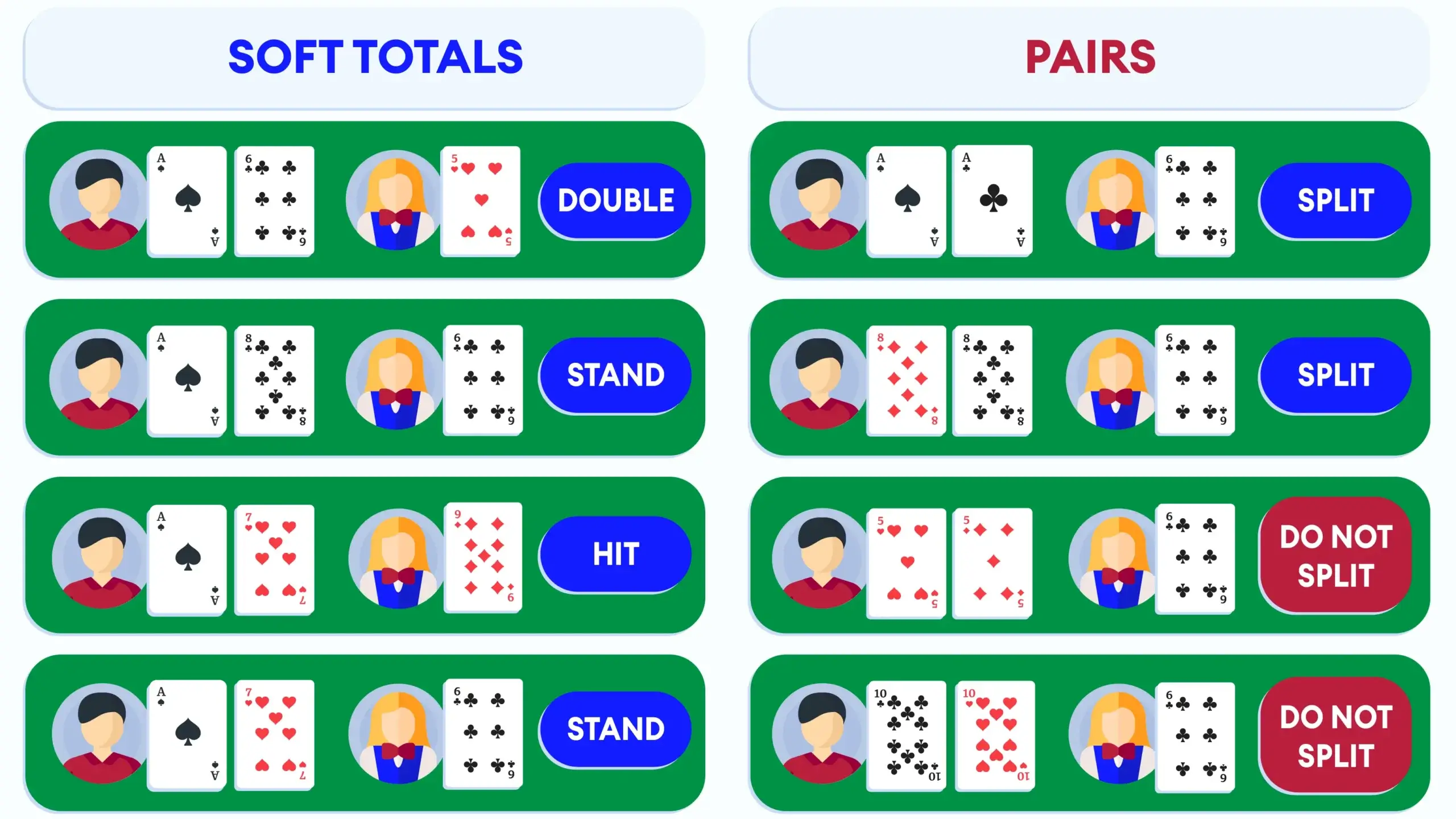
Let’s say you have a soft 18. It’s best to stand. However, if the dealer has a 3 through 6, we recommend that you double down. If the dealer has a 9, 10, or Ace, you can hit, that’s the best move.
If you have pairs, there are two rules you must follow. Always split Aces and 8s. On the other hand, if you have pairs of 5s and 10s, never split them. For the rest of the pairs, it depends on what the dealer has. However, the easiest thing to do is to look at the table below, and you’ll understand how it all works. It may seem complicated at first, but you need to grasp the basic idea. Split when the dealer’s upcard could put them in a difficult position.
| Hand | What to do | Common Mistake |
|---|---|---|
| Soft 17 | Double against 3-6, otherwise hit | Standing as if it were a hard 17 |
| Soft 18 | Double vs dealer 3-6, stand vs 2,7,8, hit vs 9,10,A | Standing |
| A,A | Always split | Keeping the aces together |
| 8,8 | Always split | Standing on a hard 16 instead |
| 10,10 | Never split | Breaking up a strong 20 hoping to get two good hands |
| 5,5 | Never split, play it as a hard 10 | Splitting instead of doubling |
One of the biggest mistakes you can make is splitting 10s. A 20 is already a very strong hand, and you can win! You’re basically giving up a very good hand on your own, so don’t do that.
Why Good Strategy Isn’t Always Enough
The basic strategy teaches you to make the right decisions on every hand, but the table rules determine the house edge. Unfortunately, some rules can significantly alter the calculations we make.
We recommend choosing tables with one or two decks. These are the ones that help you minimize the house edge the most.
Another thing you need to check is the table’s payout. Always choose tables with a 3:2 payout. These are the most advantageous for you.
Here’s what you need to do. The first thing you should do before starting a session is to check the payout. This information is listed in the game rules, and it only takes a few extra seconds to verify it.
Mistakes That Can Cost You
The basic strategy works but there are a few small mistakes that can quickly wipe out your advantage.
We recommend that you stay away from the insurance bet. This is a separate bet made when the dealer has an Ace, but it carries a much too high house edge. It’s not worth taking that risk. Likewise, we don’t recommend relying on your instincts. They can deceive you. You could lose more money than you intended. So, it’s best to set a limit right from the start and never try to recoup your loses by increasing your bet.
How to Practice Before Playing for Real Money
It’s easy to read a strategy guide, but when you have the cards in front of you, things get a little more complicated. We recommend that you practice a bit before playing for real money.
You can start with the demo tables available at many online casinos. Don’t try to memorize the chart, focus on the hands tha come up most often namely, hard 12-16 and soft 17 and 18.
Keep the chart next to you while you play. It’s perfectly normal when playing at an online casino, but if you go to a land-based casino, it’s best to check the rules!
Don’t forget that the strategy doesn’t change whether you’re playing with a live dealer or at an RNG table. The decision always remains the same.
The Bottom Line
As you’ve read above, the basic strategy is completely free, legal, and can help you reduce the house edge to 0.5%. However, don’t forget that this applies only to standard 3:2 tables, so you should always check this before you start playing.
Keep in mind that the basic strategy will never guarantee a win, but it will help you minimize the casino’s edge as much as possible. We hope this article is helpful to you.
And speaking of help, tif you feel that gambling is affecting your life, there are free support services you can turn to. The Responsible Gambling Council and Gambling Therapy are two excellent options. You’ll also find plenty of resources on responsible gambling on our website.